

Summary: We have learned something from our wars; in weeks the case for war has been debunked to a degree that took years after 9/11. Many have questioned the logic of our strategy and its odds of success. But few have asked about our methods, and their similarity to those of ISIS. We have a large lead in the body count since 9/11; time will tell if adding to it brings us victory.

.
“Wars are measured in body counts. The news carries a running tally. You change the world with rivers of blood.”
— Terrorist leader Saleem Ulman, from the NCIS-LA episode “Truth or Consequences”
.
ISIS (aka ISIL and IS) and America have something in common: a belief in the efficacy of kidnapping and killing foes (and nearby civilians). Not just killing, but high-profile killing. The kind that sears memories into the minds of one’s foes. the kind both they and us believe will shape a new world. Making rivers of blood.
Perhaps we — America and ISIS — are correct, and all that matters is who wins. No how. Or perhaps we’re both wrong, and we — both of us — are the problem.
“Secretary Kerry will now travel to the region to continue building the broad-based coalition that will enable us to degrade and ultimately destroy ISIL. … You can’t contain an organization that is running roughshod through that much territory, causing that much havoc, displacing that many people, killing that many innocents, enslaving that many women. The goal has to be to dismantle them.
— Obama revealing his plans for ISIS, 5 September 2014. Obama has forgotten that we successfully contained the Soviet Union until it collapsed.
We send special operations troops to snatch men from their homes, or kill them. We send drones assassins to kill from the sky. We use artillery for collective punishment of entire villages. We kill, then double-tap (kill) the rescuers.
.
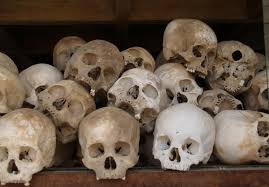
Our high motives — so different from those of ISIS — might not be visible to those living on the receiving end of our high-tech weapons. As US intelligence agencies have warned so often for so long, we’re acting as recruiters for our foes (most recently, FBI Director Corney) — as our actions show ourselves as violent foreign infidel occupiers.
We have tried fighting insurgencies by killing. It didn’t end well. Since Mao brought 4GW to maturity, many nations have tried fighting foreign insurgents by killing. It seldom ended well for them, either.
At an early intergovernmental meeting {1962} on the importance of psychological warfare, one of {General} Harkins’ key staffmen, Brigadier General Gerald Kelleher, quickly dismissed that theory. His job, he said, was to kill Vietcong. But the French, responded a political officer named Donald Pike, had killed a lot of Vietcong and they had not won. “Didn’t kill enough Vietcong,” answered Kelleher.
— From The Best and the Brightest by David Halberstam (1972)

For More Information
A few of the many good articles about our latest war:
- “White House Has No International Legal Justification for Hitting ISIS in Syria“, Josh Rogin, The Daily Beast, 15 September 2014
- “Why the United States Will Never Defeat ISIS“, Micah Zenko, Council on Foreign Relations, 18 September 2014
- “Prelude to War“, Norman Pollack, CounterPunch, 18 September 2014
About our new crusade:
- Before we start a new war with ISIS, let’s remember how we stumbled into the last two, 21 August 2014
- America plays the hegemon while ruled by fear and machismo. FAIL., 2 September 2014
- The solution to jihad: kill and contain our foes. Give war another chance!, 8 September 2014
- One day in America shows our eagerness for war. We’ll get what we want., 10 September 2014
- Law professors justify Obama’s illegal wars; more fuel for the Constitution’s pyre, 13 September 2014
- Why are we so fearful? Have we become cowards?, 16 September 2014
About bloodlust:
- Bloodlust – a natural by-product of a long war?, 11 August 2009
- No longer a danger, but a reality: bloodlust in our minds, an inevitable side-effect of a long war., 25 October 2011
- Bleak news, but vital for us to understand: American Morlocks: Another Civilian Massacre and the Savagery of Our Soldiers, 17 March 2012
.
.
