

Summary: Our reactions to films reveal much about us and our society. Why are there so many popular dark films based on our children’s comic? Why do critics object to films giving their characters horrific dilemmas? Here are my answers. Post your answers in the comments. Spoilers!

Boomers bummed by their failures
The Batman: The Dark Knight Returns


The X-Men films

In the second Avengers film, Age of Ultron

In Captain America: The Winter Soldier

The boomers love these films, perhaps because they mirror the failure of our generation. The Greatest Generation handed us strong cards. We squandered them, leaving the Millennials an America weaker in almost every way than the America we inherited. As children — so long ago — we read comic books overflowing with hope. Contemplating retirement and death we imbue the same characters with the pessimism born from our failures.
It’s not the best way to learn from a film.

Shown horrific choices, we use psychobabble to close our minds
- Passengers (2016)
- Beauty and the Beast (2017) staring Emma Watson and Dan Stevens.
Fiction allows us to imagine ourselves confronted with situations that test our values. One of the most famous is “The Cold Equations” by Tom Godwin (1954; see Wikipedia) — about a spaceship pilot facing one of the harshest decisions imaginable. Two recent films explore similar situations.

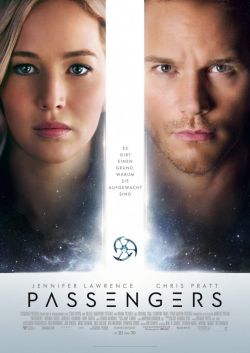

In Passengers a man awakens prematurely from suspended animation during a centuries-long trip, with no way to re-enter. What would you do when facing a lifetime alone? Would you awaken someone to keep you company, however morally wrong?
For the woman awakened, how might she regard this man who loved her? He woke her unjustly, but holding a lifelong grudge against him would not help either of them. They were a world of two, alone in space. Critics hated it, chanting “Stockholm Syndrome, Stockholm Syndrome”. As if this psychobabble would help either of these people in this terrible situation.
Disney radically changed the original “Beauty and the Beast” story by Gabrielle-Suzanne Barbot de Villeneuve (1740, see Wikipedia). Two changes dial up the tension. In the Disney versions, Beauty was held against her will. In the original the Beast says “If she comes at all, she must come willingly. On no other condition will I have her.”
Second, Disney has the rose act as a timer. When the last pedal falls, the Beast will remain a beast for the rest of his life (it is even worse in the 2017 film: the servants will die, becoming objects).
Desperate as the clock runs out, the Beast kidnaps Beauty. He knows it is wrong, but has no better options. What would you do? He wins his gamble when Beauty sees through his animal exterior to the prince within. They fall in love. Is there any other possible happy ending? Showing the empathy expected of leftist ideologues, the critics condemn the Beast and chant “Stockholm Syndrome, Stockholm Syndrome” about Beauty. It is an impermissible outcome for people to see. Both life and film must be ideological correct (our critics love their version of socialist realism).
We can learn about ourselves from these stories, but only if we imagine ourselves in the shoes of the protagonists — and honestly ask how we would react. We learn nothing by judging the characters in films excerpt the cheap thrill of self-righteousness.
For More Information
If you prefer a nice romantic comedy, without the deep questions, here’s an interesting trailer: “The Silence of the Lambs as a Romantic Comedy“.
If you liked this post, like us on Facebook and follow us on Twitter. See all film reviews, and especially these…
- Recommendation: nine of the best American romantic films.
- Why have our movies become so dark, showing a government so evil?
- Review of Dr. Strange: a good film misunderstood by the critics.
- How does The Hunger Games compare to other classic stories of children fighting children?
- “Mockingjay” shows us a path to reform for America. A great movie, but bad advice.
- James Bowman reviews Disney’s “Frozen”, & its frozen ideology.
- The Great Wall is a fun film showing us a great Chinese-American future.
Trailer for passengers

