

Summary: Millions of jobs will be lost when autonomous vehicles dominate the roads. Here Stratfor explains that most difficult factor is not building the technology, it is our fear of new technology.
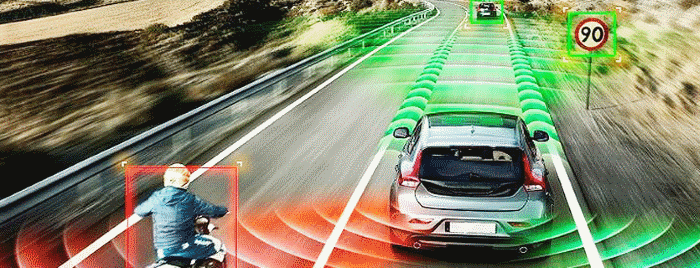
Driving Consumers Toward Automated Vehicles.
by Stratfor, 3 November 2017.
Highlights.
- Recent technological developments will keep automated vehicles on track for a limited commercial launch in the 2020s.
- Despite the advancements, however, policy initiatives to facilitate the use of automated vehicles — including regulations over the technology and over data privacy — will continue to lag behind.
- Public acceptance of automated vehicles will be the biggest obstacle to their incorporation into the global fleet and will probably limit their use over the next 10-15 years.
Analysis.
The phrase “self-driving car” is a bit of a misnomer. Despite what the name suggests, automated vehicles do have a driver — just not the kind we’re used to. Developing a computer that is robust enough to operate an automated vehicle, small enough to fit in the car and efficient enough not to drain its power source is a difficult and costly endeavor.
But California-based computing company NVIDIA seems to have solved the riddle with its latest-generation processing platform, Pegasus. Roughly the size of a license plate and 13 times more powerful than previous iterations, the newly unveiled system will meet the requirements to run a fully automated vehicle and will be available starting in mid-2018. Pegasus is just one of the rapid-fire developments in computing power, data processing and artificial intelligence that will bring the automated vehicle industry closer to its goal of releasing the technology onto select markets by the early 2020s.
Once the cars are on the road, however, they will need passengers to revolutionize transportation as we know it. And so far, the technological advancements necessary to bring automated vehicles to the market are outpacing the changes in regulation and public perception that will push them into the mainstream.

Pegasus, Take the Wheel.
One of the driving forces behind the dizzying pace of developments in automated vehicles is the steep competition in the sector. NVIDIA, one of a handful of industry leaders that haven’t been bought up by a major automaker or tech firm, is on the cutting edge of automated vehicle technology and counts companies such as Toyota Motor Corp. and Tesla Inc. among its customers. But the firm has some formidable rivals in the field. Intel Corp., for example, plans to release a rival system in 2021, working closely with BMW and with Mobileye, an Israeli company that specializes in sensing technology using radar and lidar {story here}.
Beyond processing technology, moreover, several companies in the industry, including tech giant Alphabet Inc. and its subsidiaries, are developing their own platforms to operate automated vehicles.
Nevertheless, the number of firms racing to build better and faster processors and sensors doesn’t mean that autonomous vehicles will be flooding the market anytime soon. NVIDIA intends to roll out a limited run of its new platform at first, mainly in delivery vehicles and cars used for taxi or ride-hailing services.
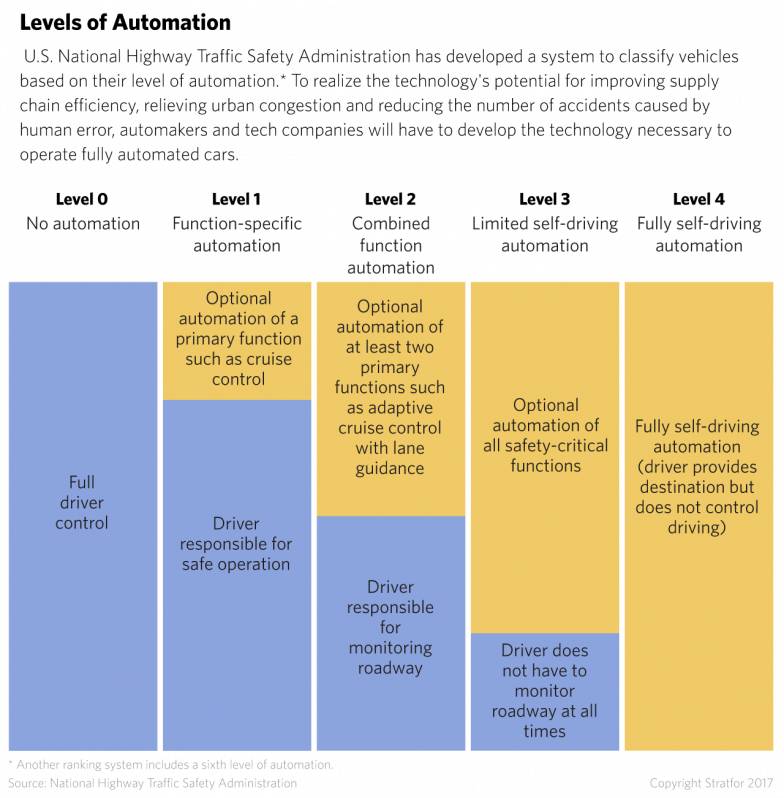
Bringing the World’s Passengers on Board.
Over the next 10-15 years, automated vehicles will probably enter use primarily in these applications. Though lawmakers in several countries are starting to catch up to the existing technology, lingering concerns over safety will limit the use of even intermediate levels of automation in cars. Germany, for instance, stopped short of sanctioning fully automated vehicles of the sort that Pegasus would support when it recently legalized automation in cars, so long as a human driver is behind the wheel.
The U.S. Congress, meanwhile, is trying to refine legislation that would establish a standard federal policy on self-driving vehicle technology. As the technology continues to evolve, new regulatory issues will arise. The more automated vehicles enter the global fleet, after all, the more data they will collect, raising legal questions over privacy. The technology required to put self-driving cars on the road may be developing apace, but public policy is a different story.
And then there’s public opinion. MIT recently conducted a survey that revealed acceptance of automated vehicles, and especially fully automated vehicles, may be decreasing. Views of the technology vary among different age groups — younger drivers are more open to self-driving cars — but even so, worries over the safety and reliability of automated vehicles are prevalent. Furthermore, when fully automated vehicles hit the roads, they will have to interact with human drivers, and human error.
The potential benefits of automated vehicle technology on supply chain efficiency, urban congestion and safety may make its eventual incorporation into the global fleet inevitable. Without technological improvements like NVIDIA’s Pegasus, the transition would be impossible. But how quickly the cars enter use depends more on changes in policy and behavior than it does on changes in technology. Though the automated vehicle industry may be ready for self-driving cars, persuading the rest of the world to hop in and buckle up will take some time.
“Driving Consumers Toward Automated Vehicles”
is republished with permission of Stratfor.
From the MIT study.
“Consumer Interest in Automation: Preliminary Observations Exploring a Year’s Change“.
By Hillary Abraham et al. at MIT Agelab, February 2017.
A third of people do not want their car to help with steering or determining the right speed. Almost-two thirds do not want the car to take control of the driving.

The young are more willing to use automation — but not a lot more willing. And everybody’s enthusiasm for robot drivers dropped from 2016 to 2017, showing that these attitudes have shallow roots — and are easily influenced.

——————————————

About Stratfor
Founded in 1996, Stratfor provides strategic analysis and forecasting to individuals and organizations around the world. By placing global events in a geopolitical framework, they help customers anticipate opportunities and better understand international developments. They believe that transformative world events are not random and are, indeed, predictable. See their About Page for more information.
For More Information
The new industrial revolution has begun. New research shows more robots = fewer jobs. Also see the famous book by Wassily Leontief (Nobel laureate in economics), The Future Impact of Automation on Workers


If you liked this post, like us on Facebook and follow us on Twitter. See all posts about robots and automation, and especially these…
- A warning about the robot revolution from a great economist.
- How Robots & Algorithms Are Taking Over.
- Economists show the perils and potential of the coming robot revolution.
- Three visions of our future after the robot revolution.
- The coming Great Extinction – of jobs.
- Lessons for us about AI from the horse apocalypse.
- A Timeline for the Extinction of Jobs by Machines.
Books about the coming great wave of automation.
Rise of the Robots: Technology and the Threat of a Jobless Future

The Second Machine Age: Work, Progress, and Prosperity in a Time of Brilliant Technologies


