Summary: As the glow of the Independence Day fireworks fades along with the roar of our applause, let’s look to the future of the Republic – and what comes after it dies.
“Every nation has the government it deserves.”
— Dark words said by Joseph de Maistre (lawyer, diplomat, philosopher) in a letter dated 13 August 1811, published in Lettres et Opuscules.

How we got here: the rise and fall of the Republic
The first American Republic was born on 1 March 1781 following ratification of the Articles of Confederation by the 13 States. The Second Republic came alive on 13 September 1788 with a resolution by Congress following ratification of the Constitution by the States. It assumed its mature form with two events in 1803. First, the Supreme Court’s decision in Marbury v. Madison re-created itself as a co-equal third branch of the government. Second, Jefferson – an advocate for limited government until he became president – re-defined the president’s power more broadly by making the Louisiana Purchase.
The Mark II version of the Second Republic was born in 1931 during the fires of the Great Depression and WWII, when the Regime was re-shaped like Play-Doh into a drastically new form. Since then the government has grown in power and reach.
A Kinsley Gaffe in 2002 by Supreme Court Justice Antonin Scalia unintentionally described our situation when he said that “The Constitution that I interpret and apply is not living, but dead.” Others have also noticed its death, or urge that we euthanize its feeble remnant.
- Law professors Eric Posner (U Chicago) and Adrian Vermeule (Harvard) explained that the Republic has died (they OK with it) in their 2011 book, The Executive Unbound: After the Madisonian Republic
- Law professor Louis Michael Seidman (Georgetown) says “Let’s Give Up on the Constitution“ in a December 2012 NYT op-ed (a confident Leftist, in his 2013 book, On Constitutional Disobedience


Unfortunately, this is all recognizing the obvious. In chapter 9 of Lewis H. Lapham’s insightful book Waiting for the Barbarians


“Lazare traces the fervor of our present constitutional devotions to the complacence that settled on the American mind following WWII …The winning of the war prompted Americans to think that their military and industrial supremacy was proof of their moral and political virtue. …
“The United States in the meantime fell behind every other country in the industrialized world in most of the categories that measure the well-being of a civilized society: the most brutal police force and the most crowded prisons, the harshest system of criminal justice, repressive drug laws, a lazy and sycophantic press. Over the span of the same 50 years our political campaigns have come to resemble nothing so much as games of trivial pursuit, charades reduced to works of performance art in which the candidates smear one another with insults instead of chocolate …
“Theocratic societies tend to have a weak grasp of reality, and toward the end of his book, remarking on the fulminations of the Country party presently holding the majority in Congress, Lazare says ‘All those Republican House freshmen in early 199 sporting copies of the Federalist Papers were not all that different from Iranian mullahs waving copies of the Koran.’
“A historian rather than a political scientist or a first-year congressman, Lazare doesn’t offer a set of instructions for redrafting the Constitution, but he carries his point about our idolatrous worship of the document, depriving us of the courage to imagine a future that doesn’t look like one of the Disney Company’s replicas of the nonexistent American past.
“The framers of the Constitution lived in a world innocent of electricity, jet aircraft, telephones, computers, nuclear weapons, and MTV; if their political mechanism had already become outworn by the middle of the nineteenth century (that is, incapable of resolving the question of slavery), then how can we expect it to address the questions likely to be presented by the twenty-first century?”
What went wrong?
“Mrs. Powel of Philadelphia asked Dr. Franklin ‘What have we got, a republic or a monarchy?’ ‘A republic, if you can keep it’ replied the Doctor.”
— Entry of 18 September 1787 in the Papers of Dr. James McHenry on the Federal Convention of 1887. He signed the Constitution, served as our 3rd Secretary of War. Fort McHenry was named after him.
In a few decades, we’ve become accustomed to the routine outrages of SWAT teams, well documented by Randy Balko of Reason magazine – from assault to murder. Seizure of assets by the government without conviction of a crime {asset forfeiture}. Law enforcement tools intended for narrow use become clubs wielded to pound innocent citizens into plea bargains (e.g., conspiracy, wire fraud, RICO). Illegal surveillance by our intelligence agencies. The President signing a Bill of Attainder. ordering the execution of an American citizen without warrant or trial by jury. These are just a few entries on a long list.
How can we so quickly lose liberties painfully acquired over many centuries? Dead trees fall more easily than live ones. We came to rely on the system erected by the Constitution – Congress, Courts, attorneys, laws – as if they had a life, of their own. As though we could live our lives in their shade, without sacrifice or effort (other than voting and jury duty) to keep the Republic’s engines running. We believed the Republic was A Machine That Would Go of Itself

How the 1% see America
Our leaders have a different perspective on the new America they are building on the ruins of the old. It was best expressed by Calvera, the bandit leader in The Magnificent Seven

Our plutocrats will probably govern well. Of course, they will make decisions in their best interest, not ours. In exchange, we’ll have the freedom to complain about the result, so long as we do so quietly. Our ever-growing internal security agencies will handle unruly dissenters.
The key: responsibility
America’s political institutions worked only so long as the Constitution lived in our hearts. When our love of self-government – and willingness to bear that heavy load – died, these institutions glided until they began to crash, toppling like dominoes.
The responsibility for the Republic’s fall is ours. Where else could it rest? If we cannot assume responsibility for ourselves, how can we hope to govern ourselves? That this remains controversial shows our decay, our loss of will and strength. The burden of self-government became too great for the people of Rome to bear, as has it has for us (more about that here).
What comes next?
What follows the death of the Constitution? The miracle of revival is inherent in each of us. Every generation offers a fresh start. But just in case events develope not necessarily to our advantage, we should devise a plan B for what comes after the Second Republic.
The end of the Constitution will be like a singularity in astrophysics. We cannot see beyond it, because we do not see or understand the choices that will determine our fate – let alone how we will choose. It also resembles a singularity in that what lies on the other side is unimportant until we survive the passage through it.
Political regimes are born, live, and die. The Constitution has brought incredible freedom and prosperity to America, but that does not make it eternal. As Queen Gertrude says to Hamlet (Act I, scene 2).
Good Hamlet, cast thy nighted colour off,
And let thine eye look like a friend on Denmark.
Do not for ever with thy vailed lids
Seek for thy noble father in the dust:
Thou know’st ’tis common;
all that lives must die,
Passing through nature to eternity.
This was said more succinctly in The Matrix

Conclusions
There is no need to panic; there’s time to think and plan, but there’s no time to waste. How should you respond to this milestone in history? My recommendation: anger and resolution. When enough of us are angry, then we can consider next steps. We can learn from the failure of the Second Republic and build a Third Republic better than the Second.
This is a follow-up to my July 4th post:
On this Independence Day, See The Future of America.
For more information
This post changed everything: A new, dark picture of America’s future.
Ideas! See my recommended books and films at Amazon.
If you liked this post, like us on Facebook and follow us on Twitter. See all posts about the constitution, about reforming America: steps to political change, and especially these…
- Important: A 4th of July reminder that America is ours to keep – or to lose!
- What comes after the Constitution? Can we see the outline of a “Mark 3” version of the USA?
- The Coming of a New American Republic – by James V. DeLong.
- A third American regime will arise from the ashes of the present one.
- Origins of what may become the 3rd American Republic (a plutocracy).
- We’ve worked through all 5 stages of grief for the Republic. Now, on to The New America!
- Our institutions are hollow because we don’t love them.
- We have forgotten who we are. Let’s remember, and win.
Inspirational reading for Independence Days
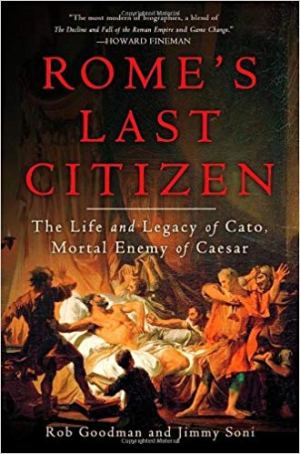
The Founders looked to the Roman Republic for ideas and inspiration. In this time of peril, we too can do so. See two books about the people who were the poles of the forces that could have saved the Republic, but instead destroyed it.
Caesar – a biography by Christian Meier

Rome’s Last Citizen