

Summary: We are in the midst of a great experiment. We live in a soup of biologically active chemicals. Some are released by industrial processes. Some are medicines we piss away. Some are chemicals we feed farm stock. We know they having strange effects on animals. Only time will tell their effect on us. Scientists are doing only small-scale research on this because we have more interesting things to worry about.

America obsesses over threats whose solutions provide big benefits for powerful groups (e.g., climate change and foreign terrorists). Threats whose solutions provide no such benefits get little attention, no matter how scary and potentially damaging.
There is a another aspect to this. We tend to identify threats by looking backwards. New threats seldom get attention. Worse are those threats on the limits of what we can see. Roman society was damaged by low-level lead poisoning, something they lacked the ability to sense or understand.
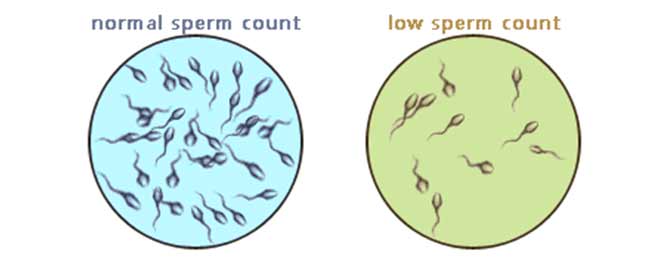
The release in America’s waters of biologically–active chemicals – especially chemicals similar to hormones – is such a threat. They are in our water and food. Evidence slowly accumulates of their effects on people but as yet without strong conclusions. They might be contributing to men’s falling sperm counts. And to other ill effects, some of which cannot even imagine today. The public has emerged onto the public stage with articles like GQ’s “Sperm Count Zero” and Toxic Cocktail: How Chemical Pollution Is Poisoning Our Brains


Let’s look at what scientists know, starting with this by Jeremy Krogh et al. in Frontiers in Marine Science, 18 December 2017.
“The presence of detectable concentrations of pharmaceuticals and synthetic personal care products (PPCPs) within natural waters has been known for some time now. …Because sewage contains a complex mixture of contaminants it is difficult to separate the ecological impacts of PPCPs from the many other toxic substances present in sewage. None-the-less, pharmaceuticals are unique among environmental contaminants as they are purposefully engineered to have impacts on patients (human and animal) at very low concentrations. The sub-lethal effects of these compounds individually or as a mixture are difficult to assess.”
By Mitch Leslie in Science, 30 August 2017.
“For more than 20 years, researchers have fretted about the effects of endocrine disruptors, molecules that meddle with the body’s hormones. Crocodilians – the group that includes crocs and alligators – have furnished some of the most dramatic examples. In the 1990s, for instance, scientists reported that male alligators from Florida’s Lake Apopka, which was fouled by a brew of hormone-mimicking chemicals, had shrunken genitalia and reduced testosterone levels.
“Like many endocrine disruptors, those chemicals triggered the same effects as estrogens, or female sex hormones. Researchers have uncovered only a few cases of the opposite problem, masculinization caused by male hormones, or androgens. Molecular biologist Elizabeth Wilson of the University of North Carolina in Chapel Hill says that whereas “there are lots and lots of compounds that will activate the estrogen receptor,” the cellular receptors that respond to androgens are choosy.
“Of the few known environmental androgens, trenbolone acetate, a synthetic steroid implanted into cattle to speed their growth, has sparked the most concern. Studies found that a derivative excreted by juiced cattle reduces minnows’ fertility, transforms female zebrafish into males, and induces other masculinizing effects.”
This is America.
Ana M. Soto & Carlos Sonnenschein in Nature Reviews Endocrinology, June 2018. Gated.
“Despite incontrovertible evidence of the harmful effects of endocrine disruptors, a sound public health policy is still absent. Meanwhile, the press has revealed the hindering role of industry lobbyists and conflicts of interest among members of the regulatory bodies. …Given the deleterious consequences of exposure to EDCs, ‘time is of the essence’ in order to preserve health and protect the public.”
“Toxic Time Bombs” by Robert Martin, an op-ed in The Scientist, 25 September 2017 – “Decades of evidence point to the untoward health effects of endocrine disruptor exposures, yet little is being done to regulate the chemicals.” He provides a useful brief history of these chemicals’ use.
“Since the 1930s, we have been increasingly exposed to many endocrine disruptors – artificial organic substances that mimic natural hormones and can threaten human health. …The challenge to developing appropriate regulations for endocrine disruptors is that evidence from epidemiology for health effects is indirect and difficult to collect. …Environmental factors are surely involved, yet hard to pinpoint. It took three decades to establish that DDT and DES impair health. Both are now strictly controlled, but their effects persist across generations.
“Unfortunately, current political initiatives in Congress aim to curtail the EPA. Proposals for new legislation range from specific initiatives that include cessation of monitoring of endocrine disruptors to complete closure of the agency. The EPA is the primary bastion protecting the public against environmental toxins, and has been fighting an uphill battle. The persistent toxic cocktail of endocrine disruptors in the environment shows just how far we still have to go to achieve effective control. What is needed is more research and more regulation …”

A sample of the peer-reviewed literature
This is a subject of active, but underfunded and uncoordinated, research.
“Endocrine disruptors and reproductive health: The case of bisphenol-A” by Maricel V.Maffini et al. in Molecular and Cellular Endocrinology, 25 July 2006. It is a good summary of the literature.
“Epidemiological studies have reported that during the last 60 years the quantity and quality of human sperm has decreased and the incidence of male genital tract defects, testicular, prostate and breast cancer has increased. During the same time period, developmental, reproductive and endocrine effects have also been documented in wildlife species. The last six decades have witnessed a massive introduction of hormonally active synthetic chemicals into the environment leading some to postulate that the diverse outcomes documented in human and wildlife populations might be the result of extemporaneous exposure to xenoestrogens during development.
“The estrogen-mimic bisphenol-A (BPA) is used as a model agent for endocrine disruption. BPA is used in the manufacture of polycarbonate plastics and epoxy resins from which food and beverage containers and dental materials are made. Perinatal exposure to environmentally relevant BPA doses results in morphological and functional alterations of the male and female genital tract and mammary glands that may predispose the tissue to earlier onset of disease, reduced fertility and mammary and prostate cancer.”
There are many papers by scientists working to determine the effects of these chemicals on humans (e.g., here, here, here, and here).

Science from the USGS
Scientists sponsored by the US Geological Service have covered this extensively for many years. Too bad we are not listening.
“In streams and rivers across the Nation, scientists are finding detectable concentrations of pharmaceuticals and other organic wastewater chemicals. For example, a recent study of the water-quality of streams in the Boulder Creek Watershed, Colorado, found a diverse set of pharmaceuticals and organic wastewater chemicals in water samples. In fact, U.S. Geological Survey (USGS) scientists found 12 of the 22 (55 percent) pharmaceuticals, and 32 of the 47 (77 percent) organic wastewater chemicals looked for in the watershed. Many of the water samples contained a complex mixture of pharmaceuticals, wastewater chemicals, pesticides, and trace metals (see supporting information for a full listing). Understanding the fate and ecological effects of this complex chemical mixture on a watershed scale is the objective of a team of USGS scientists studying the Boulder Creek Watershed. The scientists found that:
“The concentration of many of these chemicals, such as sulfamethoxazole (an antibiotic used to treat a wide range of bacterial infections), triclosan (an antimicrobial agent commonly used in soaps), and caffeine, increased dramatically downstream from the first major wastewater treatment plant (see sampling location map). However, some organic wastewater indicators (such as triclosan) were also found in much lower concentrations in the relatively pristine upper part of the watershed, and scientists attributed their occurrence to home septic systems and other sources on the landscape.
“Few of the detected compounds exceeded water-quality standards; however, many do not have water-quality standards. Although it is difficult to assess the potential for adverse ecological effects of such complex chemical mixtures in the wastewater affected part of Bounder Creek (see sampling location map), native fish populations were found to exhibit endocrine disruption, including low male-to-female sex ratio and fish having both female and male reproductive organs (gonadal intersex).”
“Endocrine Disruption Found in Fish Exposed to Municipal Wastewater” (2007).
“USGS scientists and their colleagues reported in the journal Aquatic Toxicology that exposure to the wastewater from a major metropolitan sewage treatment plant caused endocrine disruption in male fathead minnows. After exposure to the wastewater the male minnows started producing vitellogenin – a female egg-yolk protein. Treated wastewater discharge has been identified as a source of endocrine disrupting chemicals to the aquatic environment ….”
“Evidence of Endocrine Disruption Unexpectedly Found in Minnesota Lakes” (2010).
“Vitellogenin, a female egg-yolk protein not typically found in male fish, was found in several species of wild, male fish in the studied lakes. The presence of vitellogenin in male fish is commonly used as an indicator of endocrine disruption. The scientists also placed cages containing male fathead minnows in the lakes. A few of the caged male fathead minnows also produced vitellogenin after exposure to the lake water for 21 days. The scientists observed other indicators of endocrine disruption, such as male fish having female egg cells (oocytes) in their testes (commonly referred to as gonadal intersex).
“Natural steroidal hormones common in wastewaters, such as 4-androstene-3, 17-dione, 17β-estradiol, and estrone, were detected at levels that have been found to cause adverse health effects. …
“While evidence of endocrine disruption in fish was generally higher in lakes surrounded with urban land use, it was evident in lakes with other land uses as well. All of the lakes in the study are used for seasonal recreation, which also could be a source of contaminants to the lakes.”
“Complex Mixture of Contaminants Persists in Streams Miles from the Source” (2013).
“Natural processes in stream ecosystems such as dilution and microbial degradation are known to attenuate some contaminants to below levels that can cause harm to ecosystems. However, a team of U.S. Geological Survey (USGS) scientists has shown that many chemicals discharged from municipal wastewater treatment facilities persist for miles downstream at levels known, or suspected, to cause adverse health impacts to aquatic organisms – including endocrine disruption in fish. The study also showed that these persistent chemicals occur in complex mixtures with unknown ecological consequences.”
“Long-Term Study Finds Endocrine Disrupting Chemicals in Urban Waterways” (2015).
“U.S. Geological Survey (USGS) scientists determined that endocrine disrupting chemicals (EDCs) were present in wastewater treatment plant (WWTP) effluent, water, and fish tissue in urban waterways in the Great Lakes and upper Mississippi River Regions (Indiana, Illinois, Michigan, Minnesota, and Ohio) during 1999 through 2009.
“This study documented that WWTP effluent discharges can be long-term sources for a diverse group of EDCs that are not removed completely during the treatment process, and once introduced into the receiving stream, the compounds can persist for long distances downstream. All EDCs measured were detected among WWTP effluent samples …. The EDCs also were detected in the water and fish tissue of waterways receiving WWTP effluent. Biomarkers of endocrine disruption in fish indicated exposure to EDCs in the WWTP- impacted urban waterways, with a positive correlation between whole-body tissue concentrations of NP and biomarkers of endocrine disruption.”
These pages provide long lists of links to other USGS research, such as “Long-Term Study Finds Endocrine Disrupting Chemicals in Urban Waterways” (2015) and “Personal Care Products, Pharmaceuticals, and Hormones Move from Septic Systems to Local Groundwater” (2015).

Other articles about this
“BPA substitutes may be just as bad as the popular consumer plastic” by Robert F. Service in Science, 13 September 2018.
For those who want details: “Current Knowledge on Endocrine Disrupting Chemicals (EDCs) from Animal Biology to Humans, from Pregnancy to Adulthood” in the International Journal of Molecular Science, June 2018.
“Wildlife has often presented and suggested the effects of endocrine disrupting chemicals (EDCs). Animal studies have given us an important opportunity to understand the mechanisms of action of many chemicals on the endocrine system and on neurodevelopment and behaviour, and to evaluate the effects of doses, time and duration of exposure. Although results are sometimes conflicting because of confounding factors, epidemiological studies in humans suggest effects of EDCs on prenatal growth, thyroid function, glucose metabolism and obesity, puberty, fertility, and on carcinogenesis mainly through epigenetic mechanisms. This manuscript reviews the reports of a multidisciplinary national meeting on this topic.”
Men of today looking at what we were.

For More Information
See Martin van Creveld’s provocative book Pussycats: Why the Rest Keeps Beating the West

If you liked this post, like us on Facebook and follow us on Twitter. See all posts about women and gender roles, especially these…
- Xenoestrogens: a shockwave – a hidden danger.
- The Economist proclaims that men are “The Weaker Sex”.
- Women are moving on top of men in America.
- We might become a low testosterone America. More research needed, stat!
- Women on Top, chapter 10: the growing gender gap in education.
- Victims no more: the revolution puts women on top of men.
- Falling sperm counts are a danger we shouldn’t ignore.
A look at America’s future.
Low testosterone levels are linked to low sperm counts. To see where America is going, look at this test of the four men from “The Try Guys” on Buzzfeed.
“The normal T-score for an adult male ranges from 270-1,070 ng/dL, with men aged from 25-34 averaging out at 617 ng/dL. Not one BuzzFeed beta male met the 617 ng/dL average; rather, all the men testing below the level of a typical 85-year-old male (376 ng/dL). Moreover, three of the four men tested below the average range, and the male with the highest testosterone level, Eugene, still had a relatively low T-score with 363 ng/dL.” {From the Daily Wire.}
Buzzfeed Betas’ T-levels

Average male T-levels by age.

“The Try Guys”, episode 13 in season 9.

